Main Task:
Directed and Filmed By Catherine Dalton,Ellie Mannix and Bridget Long
Edited by Natalie Murray
Music Research By Bridget Long
Wednesday, 10 March 2010

Thursday, 25 February 2010
Filming- catherine dalton
As a group we filmed on the four seperate days. We filmed in a subway in hyde park, the setting took us a while to find but when we found it we knew it would fit in perfectly with the film; due to the narrative. When filming we followed the plan already set out, in doing so it enabled us to use a variety of shots. The actual process of the filming went well, we worked well as a group. Also we shared the work load when filming, so everyone filmed and had a vital role in the process.
In addition to this we did other filming at Ellie's house, this involved more close up shots. So overall we used two setting to create this film.
In addition to this we did other filming at Ellie's house, this involved more close up shots. So overall we used two setting to create this film.
Audience Feedback
After we finished filming and editing our media product we presented it to our class. we created an evaluation form with a series of questions on:
1) what was your overall impression of the film?
2| Did you think the unconventional music worked?
3)what was your opinion on the editing effects used?
4)how could the film be improved further?
5) do you think there was a good variety of shot?
With an open comment at the end.
We then handed them out to our class for them to feedback to us, some of the comments are posted below.
Will said "The film was good as it created a lot of tension" & "The music worked well as it matched the pace of the film and the panic"
Tom Said "The editing was effective and looked professional and showed well that it was part of the horror/thriller genre"
Louise Said "The short, fast pace editing kept me intrigued and i understood the plot" & "Yes, there was a lot of different shots, including close ups and long shots which gave it more variety and made it effective"
Jack Said "I liked the black and white effect as it made the red stand out in some of the shots"
Rebecca Said "I thought the editing worked well as it was fast paced which also suits the genre. I also really liked the black and white editing on the shots.
Oli Said "I think there was a wide variety of shot used and i think the editing effects were good and made it look scary, i also liked the close up of the killer with the white flashes"
Abi said "The music actually worked really well, the fast tempo works well with the fear of the protagonist and tit used very good cinematograpahy"
Thursday, 18 February 2010
Filming: Natalie Murray
Progression of filming was a very interesting and large part of our main task, we filmed over the course of two weeks and a final week in which we had to re-film a scene.
We filmed on the 21st, 22nd & 28th of Janurary and the 1st of Febuary. For three of the four days, we filmed in Londons Marble arch in a subway system which runs underneath and in Hyde Park itself. The 4th day, we filmed at Ellie's House to complete our extra images, including our final shot which read "subway 62" in blood in which we used Tomato Puree and Food colouring.
We filmed on the 21st, 22nd & 28th of Janurary and the 1st of Febuary. For three of the four days, we filmed in Londons Marble arch in a subway system which runs underneath and in Hyde Park itself. The 4th day, we filmed at Ellie's House to complete our extra images, including our final shot which read "subway 62" in blood in which we used Tomato Puree and Food colouring.

When filming, the weather was perfect becuase it was cold, cloudy and raining heavily, when filming the establashing shot of the girl walking through Hyde park in an icsolated setting, the bad weather ensured the park would be empty and added to the scary setting and fitted eprfectly into the film and genre.
When filming underground, the setting was very effective, the subway system was constantly empty and was incredibly eerie, although hard to find, it was the perfect setting for our film. We experimented with shots by using the mirrors that were on the walls. The length of the corridor subway we used was also very effective as a part of our film.
Friday, 12 February 2010
Natalie Murray
Editing the film was a challenge, it took a course of a few media lessons and we had to re-film some to make the shots fit properly and so the film opened smoothly. When editing, it became a slight challenge to ensure that all the effects on the shots were continual and that there weren't any effects that looked silly or didn't fit well in the sequence. Overall, i am very happy with the final product, it flows and there is a variety of shots to sustain interest and so it has different angles and images. As well as this there is a good use of effects and i think all the shots are cut to fit and flow. I feel that if i was to do this again i would ensure we all planned it properly so we wouldn't have the dilemma of re-filming. I enjoyed editing this sequence and it was fun to experiment with all of the effects and music that sounded good. A final challenge was fitting in the credits but i think they fit in successfully and do not break up the sequence in a way that would effect the meaning of the opening sequence.
Friday, 15 January 2010
Shot list
Shot List
1). Extreme long shot of the girl walking.
2). Extreme long shot of girl but from behind
3). Point of view shot of the murderer
4). Then there is a camera flash
5). Close up knife in a bag
6). Shot of girl walking downstairs into subway from behind
7). Long/medium shot of dark flash back
8). Medium/close up of girl (flash back)
9). Girl running past camera from stairs- medium/long shot
10). Medium close up of girl running running down the hall
11). Scary Images of subway and flashbacks
12). Medium/log shot girl running past locked gates
13). Close up of girl shaking the lock on the gates
14). Close up of tap
15). Darkened Image of mystery killer
16). Long shot of girl running down hall
17). Close up of scary image (mask)
18). Medium/long shot of girl in crying in corner
19). Close of hand shaking
20). Medium shot of girl in flash back shot
20). Long shot of girl running
21). Long shot of girl running backwards
22). Close up of girl crying and panicking
23). Girl attacked by killer
24). Close up killer (mask)
25). Close up of dead body in mirror
26). long shot of killer in hall
27). Title medium shot written in blood
Our Shots varied slightly when we created our film as we added more variety
Our Final and main idea
Title: Subway 62
Genre: Horror/thriller
Genre: Horror/thriller
Target audience: teenagers aged 16-19
Plot: The opening sequence begins with a series of long shots of a girl walking, then this is cut to a camera flash, and a still image of a knife in a bag is seen. The music now becomes more dramatic and there is a POV shot of the girl looking around, there is now a selection of shots (cross-cutting) between the present the girl and the past (the still images). As the scene continues the girl comes increasingly more worried and begins to run more quickly. She then comes across a trap (bars) and releases she can't escape the situation. Knowing this she continues to run. throughout the sequence is a series of scary images to create tension and increase the audiences questioning. The hook at the end of the sequence is a typical whodunnit.
Mise-en-scene:
We will film in an isolated setting, this is typical of the Thriller genre, the house will be darkly lighted and the girls will be dressed in dark colours, reds and black emphasising danger and death. One is dressed slightly different, to show that she will survive.
Other mise- en-scene will include props like knives, dark costumes and dark lighting
Music:
our music will be upbeat and indie sounding, we wanted to stay away from the stereotypical opening soundtrack so found something unique and interesting for the audience which also subverts slightly the stereotypical sound of an opening which will keep a sustained interest in the sequence.
Conventions of Thriller/Horror include:
Isolated settings
Suspense
Stereotypical characters- teenagers and protagonists/murderers
Mystery created
Scary atmosphere
Thursday, 17 December 2009
Our second idea
Genre:
Horror/Thriller
Target Audience:
16- 21 year olds
Plot:
A group of teenage girls are at home watching a movie on a friday night, it is dark and isolated and they are lonely. All of a sudden, there is a knock at the door. The girls come under attack , they are burgled and killed.
Only one survives.
There will be use of fast shots and chaos created by a constantly moving sequence.
Saturday, 12 December 2009
Our first idea
Before we decided on our film genre and plot, we came up with a few ideas as a group to work with and then we had a larger variety to choose from to work out which sequence would be most effective. This was our first idea, we didn't use it in the end as we didn't think it would be an effective opening sequence as it would take too much time.
Genre: Psychological thriller
Target audience: teenagers 17-20 years old
Plot:
The scene begins with quick shots of a young man, making his way to somewhere. We see lots of quick images of trains and him. The audience get a sense that the character is mysterious and dangerous. The lighting used here is dark with elements of red, creating suspense. During this sequence some of the credits come up, everything seems dark and the audience are wondering what is going to happen later in the sequence.
Then there are a series of quick cuts between a teenage house party and the mysterious man, making his way there. In the party there is a continuation of the theme of darkness and quick shots, showing that it is a teenage party. During this however the camera tends to focus in on one particular girl. Then there is a series of cross cuts between the man and the party with the girl in it.
The man then arrives at the party and there is a build up of music here. When he opens the door the music changes to the dance music that is coming from the party. The girl then comes to see the man and they make their way upstairs. Once upstairs they come to the bathroom; with no communication between them. The girl enters and then there is three very quick but faded shots of the girls face, the man’s face and a knife behind his back and the scene ends in darkness.
I think that this plot will be challenging to produce but is also very intense. The sequence will grip the audience to want to watch more; and the sequence also fits the conventions of a typical opening sequence. As it has introduced the characters, the genre, the setting and a small part of the whole plot.
Genre: Psychological thriller
Target audience: teenagers 17-20 years old
Plot:
The scene begins with quick shots of a young man, making his way to somewhere. We see lots of quick images of trains and him. The audience get a sense that the character is mysterious and dangerous. The lighting used here is dark with elements of red, creating suspense. During this sequence some of the credits come up, everything seems dark and the audience are wondering what is going to happen later in the sequence.
Then there are a series of quick cuts between a teenage house party and the mysterious man, making his way there. In the party there is a continuation of the theme of darkness and quick shots, showing that it is a teenage party. During this however the camera tends to focus in on one particular girl. Then there is a series of cross cuts between the man and the party with the girl in it.
The man then arrives at the party and there is a build up of music here. When he opens the door the music changes to the dance music that is coming from the party. The girl then comes to see the man and they make their way upstairs. Once upstairs they come to the bathroom; with no communication between them. The girl enters and then there is three very quick but faded shots of the girls face, the man’s face and a knife behind his back and the scene ends in darkness.
I think that this plot will be challenging to produce but is also very intense. The sequence will grip the audience to want to watch more; and the sequence also fits the conventions of a typical opening sequence. As it has introduced the characters, the genre, the setting and a small part of the whole plot.
--------------------------
An opening sequence of a thriller genre needs to :
introduce the main charactersintroduce the genreintroducing the plot introduce the themesidentify time and placeit must hook the audience into wanting to continue watching the filminclude titles and credit sequencemise-en-scene linked with the storyline
Genre:
Teen Psychological Thriller
Target Audience:
16-19 year old
Plot:
It begins in the dark, we see cross cutting of a persons journey to a party, cuts between him walking down a pathway to a door with images of his travels: train tracks, a highway etc.
Inside the door is a party: violent, with drugs, alcohol and loud rave music. The person walks into the party, it is all from his point of view ( he is the killer and mystery is added by not seeing his face), he sees a girl, she smiles. Chemistry is created between them as there are a range of close ups of her. She walks up stairs into the bathroom and doesnt lock the door, the killer follows her, no body notices this. As she sits in the bathroom with a bottle of beer, he walks in, locks the door. The final shots are of a knife behind his back and a change of her facial expression from happy and high to distorted and scared. Within these final shots there are cross cuts between the upstairs and downstairs, The silence of the murder contrasting with the loud downstairs event. The perfect murder.
Mise-en-scene:
The setting will be in an run down house, urban and dark. There will be use of mise-en-scene like trains that will be red, symbolising danger, death and anger of the main character. It will also establish setting of a urban area. People at the party will be dressed in ordinary clothes, but they will be ripped, torn and dirty, they must portray an incredibly outrageous party! There will be props like empty beer & vodka bottles scattered so create a dangerous and unstable atmosphere, the music will also be loud rave music to emphasis the teen party.
Another idea that we had, was to do a murder scene- although it is very typical of A Level students and film makers. The idea that arose, what an attempted burglary that went wrong. This could involve a typical family house - proven by the use of mise-en-scene, like pictures etc. with family members or school children. The beginning would show an every day day at home, consiting on continuity, love and normality.There would then be a disturbance, for example people breaking in, causing a riot, breaking things, threatening people and eventually hurting and killing someone. Throughout this whole opening sequence, there is quick, short and unpredictable shots. Adding pace, realism and suspense for the audience, which will indeed make them hooked on to the sequence and make them watch it.
introduce the main charactersintroduce the genreintroducing the plot introduce the themesidentify time and placeit must hook the audience into wanting to continue watching the filminclude titles and credit sequencemise-en-scene linked with the storyline
Genre:
Teen Psychological Thriller
Target Audience:
16-19 year old
Plot:
It begins in the dark, we see cross cutting of a persons journey to a party, cuts between him walking down a pathway to a door with images of his travels: train tracks, a highway etc.
Inside the door is a party: violent, with drugs, alcohol and loud rave music. The person walks into the party, it is all from his point of view ( he is the killer and mystery is added by not seeing his face), he sees a girl, she smiles. Chemistry is created between them as there are a range of close ups of her. She walks up stairs into the bathroom and doesnt lock the door, the killer follows her, no body notices this. As she sits in the bathroom with a bottle of beer, he walks in, locks the door. The final shots are of a knife behind his back and a change of her facial expression from happy and high to distorted and scared. Within these final shots there are cross cuts between the upstairs and downstairs, The silence of the murder contrasting with the loud downstairs event. The perfect murder.
Mise-en-scene:
The setting will be in an run down house, urban and dark. There will be use of mise-en-scene like trains that will be red, symbolising danger, death and anger of the main character. It will also establish setting of a urban area. People at the party will be dressed in ordinary clothes, but they will be ripped, torn and dirty, they must portray an incredibly outrageous party! There will be props like empty beer & vodka bottles scattered so create a dangerous and unstable atmosphere, the music will also be loud rave music to emphasis the teen party.
Another idea that we had, was to do a murder scene- although it is very typical of A Level students and film makers. The idea that arose, what an attempted burglary that went wrong. This could involve a typical family house - proven by the use of mise-en-scene, like pictures etc. with family members or school children. The beginning would show an every day day at home, consiting on continuity, love and normality.There would then be a disturbance, for example people breaking in, causing a riot, breaking things, threatening people and eventually hurting and killing someone. Throughout this whole opening sequence, there is quick, short and unpredictable shots. Adding pace, realism and suspense for the audience, which will indeed make them hooked on to the sequence and make them watch it.
Preliminary task- Catherine Dalton
Preliminary task
The preliminary task enabled us as a group to learn how to set up a short clip. In this clip we learnt how to use the camera to create different shots, and how a simple filming such as someone walking can be shown in a variety of ways to ensure the audience are kept watching. Also we learnt how to act and how to use a low and high angle shot.
Firstly we draw up a story board before completing the task. This allowed us to plan out where we were going to film, what types of shots needed to be used to allow the audience to clearly understand the plot. Also planning enabled us to make decisions on who was acting and who was going to use the camera. Completing this planning saved us time when filming as all the decisions had already been made.
Ellie and Natalie acted, whilst me and Bridget completed the filming, also Ellie and Natalie helped with filming whilst they were not acting. The sequence consisted of Ellie walking down a corridor, opening a door to see Natalie and to exchange a folder and discuss lunch, then Ellie to leave. During this short sequence we used long shots to establish the setting and close ups of the door handle, also medium shots and the 180 degree rule. All of these features allowed the sequence to flow.
After the filming process was completed, we uploaded all of the footage onto the computer. We then clearfully selected and used the tool cut to edit the film to ensure it flowed. Once completed we then uploaded the clip onto youtube.com by creating an account and then uploading the sequence. During this task we learnt how to plan, film, edit and upload clips to youtube.com.
The preliminary task enabled us as a group to learn how to set up a short clip. In this clip we learnt how to use the camera to create different shots, and how a simple filming such as someone walking can be shown in a variety of ways to ensure the audience are kept watching. Also we learnt how to act and how to use a low and high angle shot.
Firstly we draw up a story board before completing the task. This allowed us to plan out where we were going to film, what types of shots needed to be used to allow the audience to clearly understand the plot. Also planning enabled us to make decisions on who was acting and who was going to use the camera. Completing this planning saved us time when filming as all the decisions had already been made.
Ellie and Natalie acted, whilst me and Bridget completed the filming, also Ellie and Natalie helped with filming whilst they were not acting. The sequence consisted of Ellie walking down a corridor, opening a door to see Natalie and to exchange a folder and discuss lunch, then Ellie to leave. During this short sequence we used long shots to establish the setting and close ups of the door handle, also medium shots and the 180 degree rule. All of these features allowed the sequence to flow.
After the filming process was completed, we uploaded all of the footage onto the computer. We then clearfully selected and used the tool cut to edit the film to ensure it flowed. Once completed we then uploaded the clip onto youtube.com by creating an account and then uploading the sequence. During this task we learnt how to plan, film, edit and upload clips to youtube.com.
Thursday, 10 December 2009
Evaluation of Preliminary Task - Ellie Mannix
The planning of our preliminary task was constructed through bullet points of what we planned to do, what shots and dialogue. We then translated this into a storyboard, drawing these bullet points up, of how the film would look - in a still capture mode.
For the preliminary task, I was the main role - I walked through the corridor into the common room to meet Natalie. We then held some dialogue between each other, and then I got up and walked away.
I also helped contribute to what shots should be used and to edit.
We delegated the rolls equally, as other people in my group did not wish to be filmed.
From doing this preliminary task, as a group we have learnt a lot. As our final production, was the second preliminary task we created. As the first one we created, was too complex, too long and did not involve the necessary shots and rules in which would obtain us the 50% of the course.
So as a whole, we learnt that we should not try and over complicate things, as a result we had to re-film the whole task. I felt that doing this was an advantage as we now knew what we had to do in order to be correct, instead of handing in something that was not worthy.
To plan our task, we used bullet points, and then translated them onto storyboards, making sure the shot type, timing, angle and dialogue at the bottom of the drawn image of a still frame so we would be precise when we was producing our film.
When we was filming, we carefully though through where the camera should be positioned in order to create that effect, of establishing the setting, making sure it is understandable, and most of all creating an effective sequence in which the audeince will understand and enjoy what they are watching. We ensured we did the 180 degree rule and the shot reverse shot when filming - this can be seen when Natalie and I are talking. We also used cross-cutting to Natalie in the common room, which establishes the setting and what I was walking too - proving that we abided to the rules and regulations of filming.
We ensured that the area we used would be empty, which would reduce the noise - in order to hear the dialogue at a high quality and reduce the chance of interruptions - this was achieved as we had the common room to ourselves.
For post- production, we uploaded our film from the camera on to the computer using a fire wire. This imported our work into a new task in Movie Maker. From this we edited it, using the cutting tool, swapping and changing shots which were more suitable to that particular part of our film, in order to achieve maximum quality. After it was all edited, we saved the film and then uploaded it onto 'YouTube', and then to our blog.
To edit our clips we took whilst filming, we used Apple Mac iMovie Maker. This is a good programme to edit a sequence, as it has good cutting settings in which you can 'split at radio play head' and adjust in where you wish for it to go.
We also used a video camera, digital film and a tripod to film. We found the camera easy to use, as we only pressed one button to record, and to stop recording, and use the tri-pod to make sure the shots were still and therefore of a good quality.
For the preliminary task, I was the main role - I walked through the corridor into the common room to meet Natalie. We then held some dialogue between each other, and then I got up and walked away.
I also helped contribute to what shots should be used and to edit.
We delegated the rolls equally, as other people in my group did not wish to be filmed.
From doing this preliminary task, as a group we have learnt a lot. As our final production, was the second preliminary task we created. As the first one we created, was too complex, too long and did not involve the necessary shots and rules in which would obtain us the 50% of the course.
So as a whole, we learnt that we should not try and over complicate things, as a result we had to re-film the whole task. I felt that doing this was an advantage as we now knew what we had to do in order to be correct, instead of handing in something that was not worthy.
To plan our task, we used bullet points, and then translated them onto storyboards, making sure the shot type, timing, angle and dialogue at the bottom of the drawn image of a still frame so we would be precise when we was producing our film.
When we was filming, we carefully though through where the camera should be positioned in order to create that effect, of establishing the setting, making sure it is understandable, and most of all creating an effective sequence in which the audeince will understand and enjoy what they are watching. We ensured we did the 180 degree rule and the shot reverse shot when filming - this can be seen when Natalie and I are talking. We also used cross-cutting to Natalie in the common room, which establishes the setting and what I was walking too - proving that we abided to the rules and regulations of filming.
We ensured that the area we used would be empty, which would reduce the noise - in order to hear the dialogue at a high quality and reduce the chance of interruptions - this was achieved as we had the common room to ourselves.
For post- production, we uploaded our film from the camera on to the computer using a fire wire. This imported our work into a new task in Movie Maker. From this we edited it, using the cutting tool, swapping and changing shots which were more suitable to that particular part of our film, in order to achieve maximum quality. After it was all edited, we saved the film and then uploaded it onto 'YouTube', and then to our blog.
To edit our clips we took whilst filming, we used Apple Mac iMovie Maker. This is a good programme to edit a sequence, as it has good cutting settings in which you can 'split at radio play head' and adjust in where you wish for it to go.
We also used a video camera, digital film and a tripod to film. We found the camera easy to use, as we only pressed one button to record, and to stop recording, and use the tri-pod to make sure the shots were still and therefore of a good quality.
Drama Film- Catherine Dalton
Drama Films
The conventions of drama films consist of real life situations and portray conflict within them. These conflicts are either between the characters themselves or other forces of nature. The films show humans at their best, worst and everything in between. So the idea of drama films to portray real motion, that happens in everyday life, this will help the audience as they will have something to relate to. The genre drama has a huge spectrum of sub-genres including: - social problem dramas, mental illness, youth and generation conflict and political dramas. This therefore means that the genre film has an the ability to take social views and current events and use them in films, as the conventions include real life situations.
I am going to analyse Chariots of Fire this film is a sports drama film. The narrative consists of two stories, these two stories involve English runners. One of these runners is a devout Protestant and the other is Jewish, it tells the story of their lives and the competing of the Paris Olympics in 1924. Firstly the sequence has a shot of a group of people, and has a voice over “wings on our heels” demonstrating that the speech previously consisted of athletics. After this quote, there is a medium close up shot of the athletes feet running, demonstrating a link between the two settings, this is also cross cutting. The credit sequence shows a group of athletes running along a beach; it focuses slowly on each one of them demonstrating that they may have some importance in the storyline/narrative. Futhermore after the original shot of the feet it moves up showing the rest of the athlete. The music is very rhythmical and peaceful, with the sound of breathing. These conations show that what they are doing is something they enjoy. Then there is a panning shot showing all the athletes and the importance of the main characters is established here, as they are more focused on. The title is portrayed in blue and red, showing the nationality of the athletes and also the red could be seen as passion for what they are doing and blue for the sea. Then there is a long shot of the athletes, with the sound of birds representing the setting. An old man and young boy are also pictured watching them run, showing that the athletes are respected and well known. The final shot is also a long shot of the athletes running towards a large run bricked building, after jumping over fencing to reach the house. These fences may represent barriers that the athletes have to overcome.
The conventions of drama films consist of real life situations and portray conflict within them. These conflicts are either between the characters themselves or other forces of nature. The films show humans at their best, worst and everything in between. So the idea of drama films to portray real motion, that happens in everyday life, this will help the audience as they will have something to relate to. The genre drama has a huge spectrum of sub-genres including: - social problem dramas, mental illness, youth and generation conflict and political dramas. This therefore means that the genre film has an the ability to take social views and current events and use them in films, as the conventions include real life situations.
I am going to analyse Chariots of Fire this film is a sports drama film. The narrative consists of two stories, these two stories involve English runners. One of these runners is a devout Protestant and the other is Jewish, it tells the story of their lives and the competing of the Paris Olympics in 1924. Firstly the sequence has a shot of a group of people, and has a voice over “wings on our heels” demonstrating that the speech previously consisted of athletics. After this quote, there is a medium close up shot of the athletes feet running, demonstrating a link between the two settings, this is also cross cutting. The credit sequence shows a group of athletes running along a beach; it focuses slowly on each one of them demonstrating that they may have some importance in the storyline/narrative. Futhermore after the original shot of the feet it moves up showing the rest of the athlete. The music is very rhythmical and peaceful, with the sound of breathing. These conations show that what they are doing is something they enjoy. Then there is a panning shot showing all the athletes and the importance of the main characters is established here, as they are more focused on. The title is portrayed in blue and red, showing the nationality of the athletes and also the red could be seen as passion for what they are doing and blue for the sea. Then there is a long shot of the athletes, with the sound of birds representing the setting. An old man and young boy are also pictured watching them run, showing that the athletes are respected and well known. The final shot is also a long shot of the athletes running towards a large run bricked building, after jumping over fencing to reach the house. These fences may represent barriers that the athletes have to overcome.
Kung Fu Panda opening sequence- Catherine Dalton
Kung Fu Panda- opening sequence
http://www.artofthetitle.com/2008/10/03/kung-fu-panda/
I am going to analyse Kung Fu Panda which is a cartoon film, directed by James Baxter. The opening sequence begins with a blue setting, that then changes to an orange setting with the title Kung Fu Panda, there is also a music change to demonstrate the significance of the name; effectively drawing the audience in. Then there is a shot of the title going and the camera moving down, demonstrating that the Kung Fu Panda is below, also establishing the setting. Then there is a voice over, describing the situation and a close up of the Panda, although he does not show his face. This may represent his power. Then there is a long shot of a building with the Panda in the shot, showing the audience where the narrative is going, this helps to move the narrative on quickly. The sequence then progressing into a fight where the Kung Fu Panda wins, this shows that he is powerful and the bright colours whilst he is fighting portray this further.
During this battle there is a second voice over saying “Get up, you will be late for work” and the shot then shows the Panda falling onto a wooden floor and his surrounding disappearing. This image of him falling, acts as a reality check for the Panda, and demonstrates to the audience that the experience that the Panda had undertaken was a dream.
Overall this sequence uses generic codes and conventions for an opening sequence, as it introduces the narrative, which consists of a Panda’s dream to be good at Kung Fu. Also introduces the main characters, and acts as a cliff hanger, as the audience now are interested to see more of the film.
Lastly I found the site useful, due to the comments on the bottom of each clip and the way that each clip can be easily used. This is helpful as it allowed me to easily click and use the clips around the site, also the quality of the clips were good, making it more enjoyable to watch. In addition to this the wide range of films to choose from, and information about the films aiding the studying and researching of conventions of opening seqences.
http://www.artofthetitle.com/2008/10/03/kung-fu-panda/
I am going to analyse Kung Fu Panda which is a cartoon film, directed by James Baxter. The opening sequence begins with a blue setting, that then changes to an orange setting with the title Kung Fu Panda, there is also a music change to demonstrate the significance of the name; effectively drawing the audience in. Then there is a shot of the title going and the camera moving down, demonstrating that the Kung Fu Panda is below, also establishing the setting. Then there is a voice over, describing the situation and a close up of the Panda, although he does not show his face. This may represent his power. Then there is a long shot of a building with the Panda in the shot, showing the audience where the narrative is going, this helps to move the narrative on quickly. The sequence then progressing into a fight where the Kung Fu Panda wins, this shows that he is powerful and the bright colours whilst he is fighting portray this further.
During this battle there is a second voice over saying “Get up, you will be late for work” and the shot then shows the Panda falling onto a wooden floor and his surrounding disappearing. This image of him falling, acts as a reality check for the Panda, and demonstrates to the audience that the experience that the Panda had undertaken was a dream.
Overall this sequence uses generic codes and conventions for an opening sequence, as it introduces the narrative, which consists of a Panda’s dream to be good at Kung Fu. Also introduces the main characters, and acts as a cliff hanger, as the audience now are interested to see more of the film.
Lastly I found the site useful, due to the comments on the bottom of each clip and the way that each clip can be easily used. This is helpful as it allowed me to easily click and use the clips around the site, also the quality of the clips were good, making it more enjoyable to watch. In addition to this the wide range of films to choose from, and information about the films aiding the studying and researching of conventions of opening seqences.
Natalie, Catherine, Bridget and Ellie
Our finished Preliminary task
Evaluation as a group:
Our preliminary task was a short sequence of a person walking through a door into a room and having a conversation, the sequence had to contain 180 Degree rule, Shot reverse shot & continuity editing.
As a group, we filmed, planned and edited our short preliminary task. We began by discussing where we would like to film and decided as a group our shot types. We decided on our dialogue which was a girl entering a room and speaking to another, discussing that shed forgotten her folder. They then speak about lunch and the first girl leaves again. We decided on a typical school setting, so we chose the common room.
We then filmed, as a group, Ellie and Natalie were both acting with Catherine and Bridget filming, when Ellie or Natalie weren't acting they helped film.
Once we finished Filming, we edited as a group and decided what worked best. There were few encounters we had which were problems, such as lighting and background music which we had to attempt to solve. If we were to do it again, we would make sure that the lighting was consistent throughout our shots.
We used a range of digital technology such as a digital camcorder and the I-Movie software on the IMac computers. We uploaded our prelim task onto www.youtube.com. By creating and uploading our video we have learnt that it is easy to see how audiences and producers have converged and the gap between them is tightening.
Sunday, 6 December 2009
Edward Sissor Hands - Opening sequence analysis By Ellie Mannix

This is many shots from the credit sequence of Edward Sissor Hands. They are still shots taken from the sequence and made into a collage, establishing what is in the opening sequence.
Jonny Depp as Edward
Tim Burton as Director
Wednesday, 2 December 2009
Casino Royale Opening Title Sequence. Bridget Long
During thursday's lesson we were introduced to the website ArtOfTheTitle.com the website has many opening sequences of movies which are viewable to everyone and comments can be made about them whether it is criticism or praise. I decided to look at and evaluate the opening of Casino Royale as it appears to be one of the more popular opening sequences and also one that i enjoy.

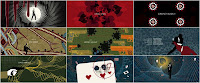
The opening of Casino Royale uses animation however still included the main character not as a cartoon which creates a 3D effect. During the opening we get a sense of what the film is going to be about, what type of genre it is and are briefly introduced to the main character. The gun is a main feature of the opening sequence as it establishes clearly the genre of the film while also providing a launch pad for animation. We are introduced ot the setting of the central city of London through the animation also which informs the audience of the type of area it will be set in. Death and danger is shown in the introduction also by the dripping blood which is a convention to the genre of action thriller, this creates excitement for the audience while also creatin dramatic effect.
I believe that the opening sequence is successful in enticing the audience and preparing them for what it will entale. The music i think also creates effect and makes it even better. I like the animation side as the credits role. I found the website very interesting, enjoyed watching several openings and what other people had commented on different openings, seeing their thoughts and opinions on what they thought had worked well and hadn't.
Catch Me if You can. Natalie Murray
Artofthetitle.com is a website which has a wide range of movie opening sequences which have feedback from audiences giving input and also questions about what they've viewed.
The sequence is also shown in individual clip frames so the viewer can see individual frames of the sequence itself.
Catch me if you can stars Leonardo Di Caprio, Martin Sheen and Tom Hanks. It was directed by Steven Spielberg and the screenplay was written by Jess Nathanson. The movie was made in 2002 and based on the book "Catch Me If You Can: The Amazing True Story of the Youngest and Most Daring Con Man in the History of Fun and Profit” written by Frank Abagnale jr and Stan Redding.
The opening sequence of Catch me if you can is very different to many other opening sequences. It consists of a series of animated images of people silhouetted in black on coloured backgrounds such as blue, orange and green including some other colours like yellow appearing to add interest or draw attention to a specific part of the frame. This adds effect to the opening as it creates mystery and as many opening sequences do, it has an hook or enigma, enticing the audience into watching more. The opening sequence, in essence, sums up the entire plot without giving away what actually happens. Again, the audience will be interested with the element of mystery. The animated sequence creates symbolism for the audience, each image relates to a scene within the film so the opening sequence is very important.
The music begins slow and ends slowly too, with upbeat and a jazzy feel within the main part of the opening sequence. The Jazz element of the music introduces slightly the time the film was set, around the 1960’s. The upbeat music is interesting and keeps the audience amused.
There is a variety of shots used, the shots change as the story progresses in the opening sequence, the shots are interesting as they are continual but are dynamic and constantly catching your eye.
The opening sequence uses some conventions of opening sequences, it uses credits, this introduces the actors and director etc. It also has a hook or enigma. The opening sets the time with the music and the silhouettes are represented in suits and high class wear, although we cannot see any costumes or sets, the symbolic images introduce the era quite well.
The sequence is also shown in individual clip frames so the viewer can see individual frames of the sequence itself.
The Image on my screen looked like this before i played the sequence.
I will be analysising the opening sequence of Catch me if you can from the website.


Catch me if you can stars Leonardo Di Caprio, Martin Sheen and Tom Hanks. It was directed by Steven Spielberg and the screenplay was written by Jess Nathanson. The movie was made in 2002 and based on the book "Catch Me If You Can: The Amazing True Story of the Youngest and Most Daring Con Man in the History of Fun and Profit” written by Frank Abagnale jr and Stan Redding.
The opening sequence of Catch me if you can is very different to many other opening sequences. It consists of a series of animated images of people silhouetted in black on coloured backgrounds such as blue, orange and green including some other colours like yellow appearing to add interest or draw attention to a specific part of the frame. This adds effect to the opening as it creates mystery and as many opening sequences do, it has an hook or enigma, enticing the audience into watching more. The opening sequence, in essence, sums up the entire plot without giving away what actually happens. Again, the audience will be interested with the element of mystery. The animated sequence creates symbolism for the audience, each image relates to a scene within the film so the opening sequence is very important.
The music begins slow and ends slowly too, with upbeat and a jazzy feel within the main part of the opening sequence. The Jazz element of the music introduces slightly the time the film was set, around the 1960’s. The upbeat music is interesting and keeps the audience amused.
There is a variety of shots used, the shots change as the story progresses in the opening sequence, the shots are interesting as they are continual but are dynamic and constantly catching your eye.
The opening sequence uses some conventions of opening sequences, it uses credits, this introduces the actors and director etc. It also has a hook or enigma. The opening sets the time with the music and the silhouettes are represented in suits and high class wear, although we cannot see any costumes or sets, the symbolic images introduce the era quite well.


Thursday, 26 November 2009
Lesson Review- Catherine Dalton
In today’s lesson we looked at each group’s review of a particular genre, and there film analysis that complimented this. With each group we made notes to learn about other genres and more importantly identify and learn to identify typical opening sequence conventions in opening sequences, helping us with analysis.
Firstly we looked at a group whose genre was Crime and Gangster. The main conventions involved in this genre included stereotypical characters such as a hero, victim and villain; also it introduces the setting, narrative and has credits. Also the conventions would include a hook or enigma code.
This particular group looked at the film Lock, stock and two smoking barrels, this opening sequence focuses on the crime genre, we know this due to the mise-en-scene used, the dull lighting and the characters and costumes used, also the speech and situation. In this sequence we clearly see or can easily recognise the genre, due to the main character he costume consists of a typical London outfit and the dull background backs up the idea that he is not only the main character but is a typical, crime character in London, this is further reinforced when the police begin to chase after him, after a situation to portrayed of them selling illegal goods. This illegal selling also emphasises the genre. This film opening sequence also fits in the opening scene conventions, such as an introduction to the characters with a credit sequence, also it establishes the setting and finishes with a chase sequence is chase sequence acts as a hook and enigma code to make the audience want to watch more of the film.
http://www.youtube.com/watch?v=_o1UXSxTjfo
Secondly as a class we looked at James Bond’s opening sequence. This particular opening sequence goes with the typical conventions of an opening sequence, it introduces the setting, which is a crowded setting, also introduces the main characters it does this by framing them individually, also adds cross-cutting between the characters. In addition to this it has stereotypical characters such as the hero, we know he is the hero as he is dressed in bright colours, unlike the villain who is dressed in much darker colours. Furthermore there is an enigma code to draw the audiences attention in, when James Bond is seen looking into a backpack.
Also conventions of action are used in James Bond, fast-paced camera shots are used, a variety of setting, this variety of setting is seen in the chase sequence, when it takes them to several different places. Also the use of variety of shots, this is seen in a Point of View shot of the mobile phone. The music is also constantly changing building up tension and subspense this also relates to convention but of the Action theme. Lastly the use of varied camera shots helps the sequence to move on quickly and also establishes the main character, this is due to a low angle shot showing the main character.
Lastly, I found the lesson very helpful as it enabled me to link my knowledge of both opening sequence conventions and genre conventions to particular films, also my looking at all the groups I was able to learn about new genres and there own specific conventions.
Lesson Review, Natalie, 26/11/09
After last weeks lesson where each group individually analysed a genre and opening sequence, each group did a small presentation of the genre they analysed and the rest of us took notes. Each group did a different opening sequence from James Bond: Casino Royale to Texas Chainsaw massacre.
Each group did a review of an opening sequence explaining its conventions and how it is used. Every sequence showed different conventions of its genre as well as different conventions of an opening sequence. Some included credits whereas others didn’t, some included introduction of main characters where as some were only introductory of the genre.
Individually I evaluated each groups opening sequence and took notes on what conventions appeared in each sequence. The main conventions of opening sequence includes introduction of an characters, settings, genre, time & date, plot, narrative, and uses credits and has a hook which entices the audience to want to watch more.
The first sequence we went through was from the crime and gangster genre, conventions of this genre include, death/crime, hero & villain, criminals, authority which is represented negatively, set in a busy urban city and an easy to recognise set. The opening sequence was the film ‘Lock, stock & two smoking barrels’, the plot Is of a gambler selling illegal goods on the street, it is set in an urban area of east London, this can be seen from the costume and the accent of the main character. There is use of credits between shots to break up the narrative but keep the audience interested at the same time. We are introduced to the main characters as an audience. AS well as this, we are introduced to the setting and genre. There is grey use of lighting which represents the area and lifestyle. There is a use of slow motion at the end of the sequence with a voice over spoken over the top. The slow motion adds emphasis to the central characters and the situation they are in, the slow motion also represents that the characters are running out of time and allows the audience to take in what has happened prior to this. There is music also within the sequence which adds pace and keeps the audience interested. The hook used is at the slow motion section which keeps the audience amused.
This is the opening sequence of Lock, Stock And two Smoking Barrels
The second sequence was of the Thriller genre. The conventions of this genre includes adding intensity, tension and suspense. Other conventions include, scary & dark music, isolated setting, death, dark lighting, tracking shot, point of view shots to add mystery and tracking shots. The sequence that this group analysed was the ‘Texas Chainsaw Massacre’, This sequence was a very different sequence to the others that I viewed, it contained a series of dark and montage images which represented death and a sinister feel. There was use of dark lighting to emphasis the genre. The character was introduced by a name instead of an image. There were images of mutations to introduce the genre and the title of ‘Massacre’. The character is mysterious as we don’t actually see them and are not properly introduced to them. We are engaged as an audience with use of burning images, sinister and creepy music and powerful images.
This is the opening sequence of The Texas Chainsaw Massacre
The two sequences are incredibly different, 'lock, stock and two smoking barrels' uses credtis, continuity editing and introduction of characters where as 'the texas chainsaw massacre' doesn't use credits and uses montage editing. The music for both sequences are incredibly different too, this is because the target audiences and genres are both different so serve different purposes.
I learnt a lot from viewing others sequences and it added to my knowledge of other genres. Now when we decide as a group what genre opening sequence to do, i feel we will have far more knowledge on how to do this and our options won't be as limited as they were previously.
Websites used: www.Youtube.com
Analysis of Lesson 26/11/2009 By Ellie Mannix
Firstly, today in lesson we had to prepare our presentation of our specific film genre - western. We were then presented with the remaining of the class' work. We moved round the class room, listening and watching each groups films they analysed and the conventions for this specific genre.
Each group did a review of an opening sequence explaining its conventions and how they are used. Everyone's different sequence' showed different conventions of that specific genre as well as the conventions of an opening sequence.
Group 4 researched into the film genre 'Crime and Gangster'. They introduced us to the conventions of this specifc genre; it is usually associated with death, crime, drugs, illegal actions, situated in an urban setting where the hero goes after the criminal. Nevertheless these films normally glorify the rise and fall of a particular criminal(s), gang, bank robber, murderer or lawbreakers in personal power struggles or conflict with law and order figures.
As a group they analysed the opening sequence of 'Lock Stock and two smoking barrels' where it is clearly identifiable to the audience who the 2 main characters are, one of the times this is portrayed is when they were running away from the local police authority, not only establishing the two characters through the use of an extreme close up but the genre of his specific film. The opening sequence also identifies the setting; a run down urban area of
The dark, dirty eary setting adds to the mystery of the plot as it is only the opening sequence in which we await for the rest of the film. Also in this sequence, the slow paced editing
The very first shot we are introduced to is the main character selling items which were ''not stolen, just not paid for yet' introducing to the crime in this film as he is selling stolen goods on a street which in inevitably illegal - crime genre.
We were then introduced to the idea that the slow pace editing of the two main characters escaping relates to establishing the men and the setting and situation they are in, slowing down the pace for the next activity.
The voice over is then heard, which helps the audience familiarise with what they have just watched, relating to crime and gangster as they voice overs are stereotypically used to introduce to the audience the film.
Moreover, the credit sequence in imbeded into the film,, cutting in between the opening sequence.
Lastly, the music in this opening sequence is extremely rapid, which also creates the pace and adds to the adrenaline of the storyline.
Subscribe to:
Posts (Atom)